

.webp)
Water damage can happen quickly and without much warning. A burst supply line, overflowing appliance, roof leak, or plumbing failure can leave homeowners unsure of what to do first. The steps you take immediately after discovering water damage can affect the extent of the damage, the drying process, and how much of your home can be restored.
If you discover water damage in your San Diego County home, focus first on safety and stopping the source of the water when it is safe to do so. From there, documenting the damage and beginning professional water mitigation as soon as possible can help limit additional problems.
Crisp Restoration responds to water damage projects across San Diego County, including San Diego, Chula Vista, La Mesa, El Cajon, Santee, Poway, Carlsbad, Oceanside, and nearby communities.
Depending on the loss, the job may require emergency water extraction, flood cleanup, moisture detection, structural drying, selective demolition, and water damage restoration.
Before entering an affected area, consider whether the water may have created an electrical, structural, or contamination hazard. Standing water near electrical outlets, appliances, or an electrical panel should be treated cautiously.
If there is any concern about electrical safety, avoid entering the area until the power can be safely addressed. Water from a sewage backup or other potentially contaminated source should also be left to trained restoration professionals with appropriate protective equipment.
If the damage is coming from a plumbing leak and you can safely access the shutoff valve, stopping the water is one of the most important first steps.
Depending on the situation, this may mean:
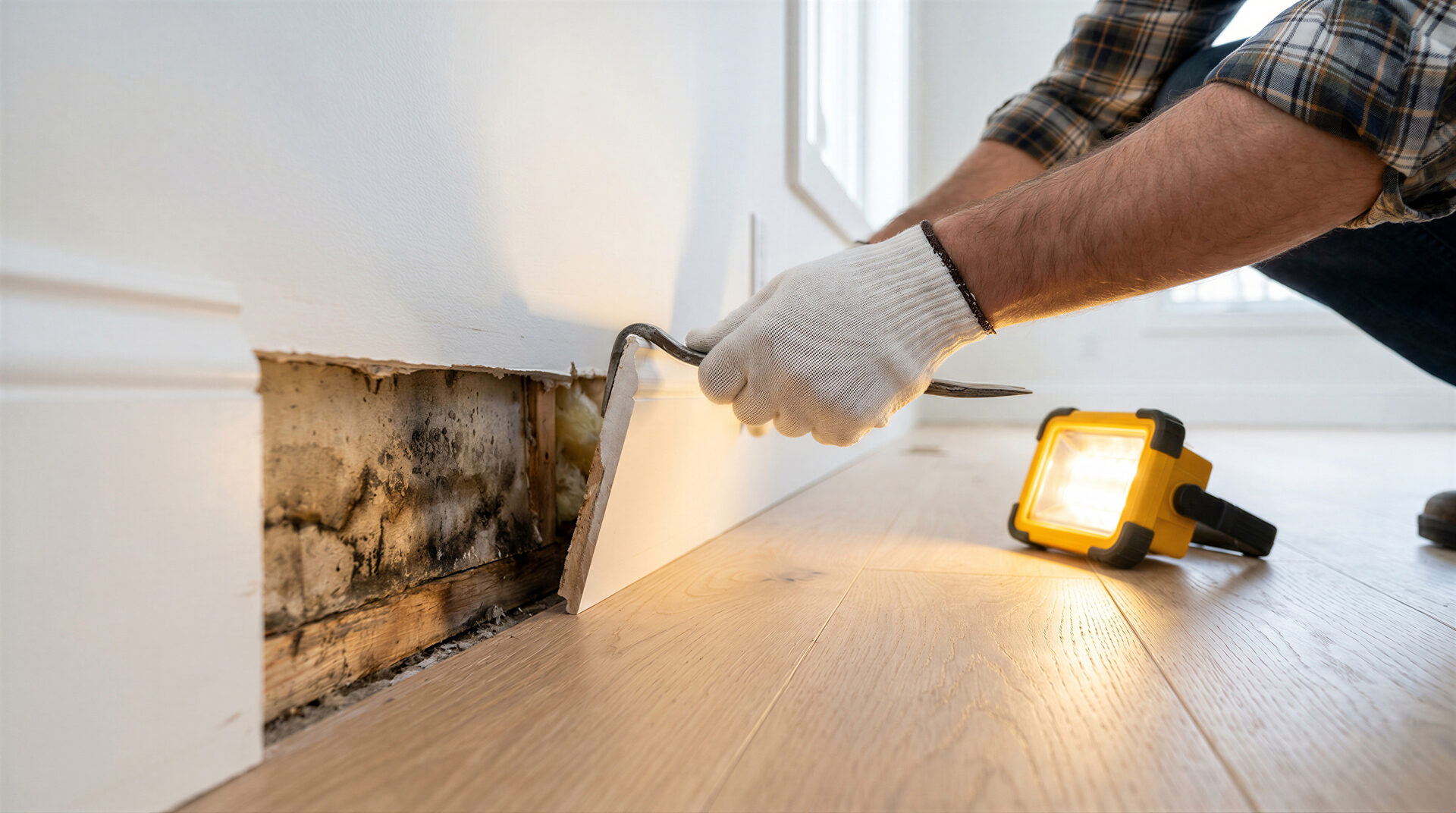
Stopping the source does not mean the water damage is resolved. Water can travel underneath flooring, behind baseboards, into drywall, and through wall or ceiling cavities.
Before moving or disposing of damaged materials, take photos and videos of the affected areas when it is safe to do so. Document visible water, damaged flooring, walls, ceilings, furniture, and personal belongings.
This documentation may be useful when communicating with your insurance carrier. Keep records of the approximate time the damage was discovered, the suspected cause, and any emergency steps taken.
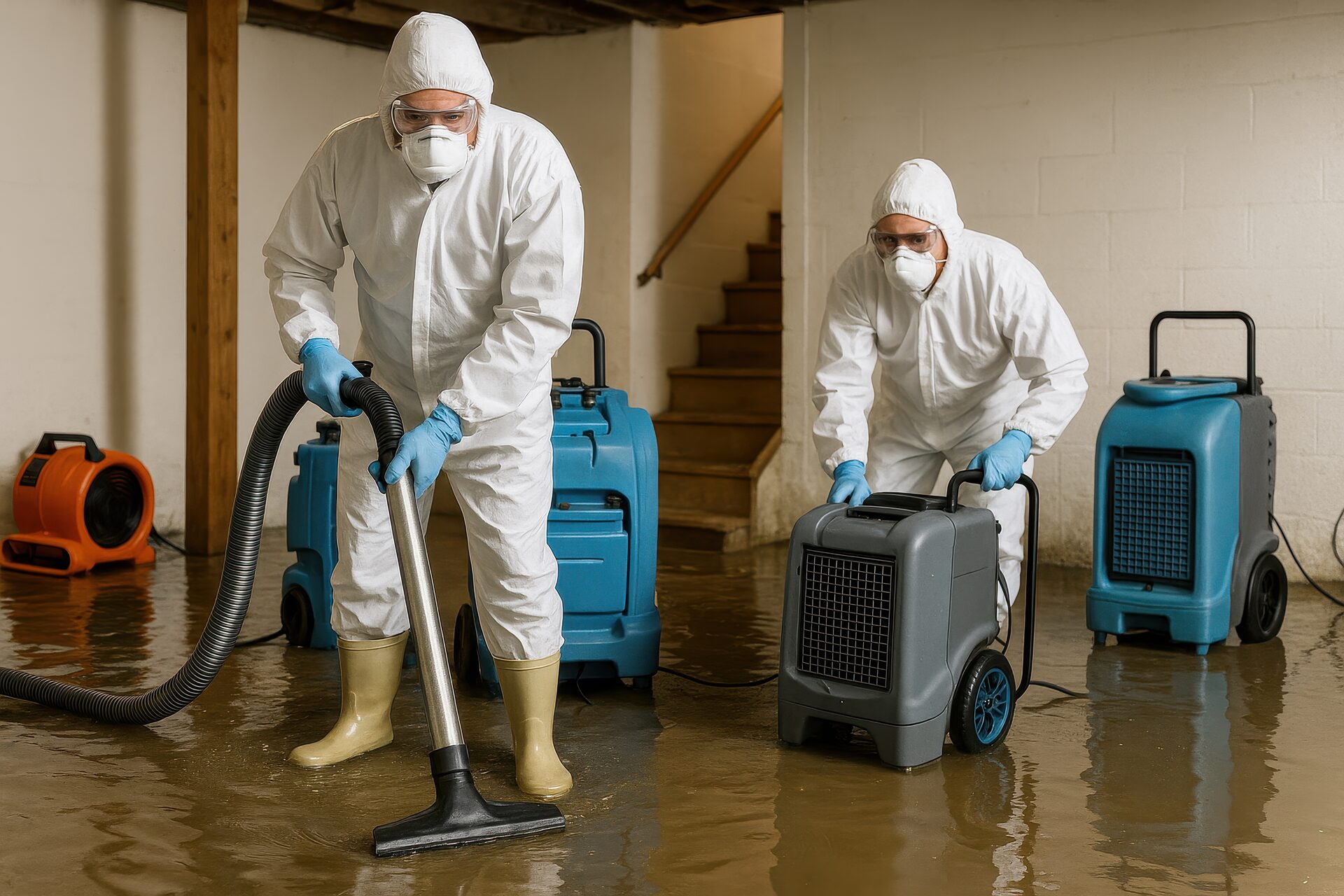
Visible water should be removed as quickly as possible, but water extraction is only part of the mitigation process. Materials that appear dry on the surface can still contain significant moisture.
Professional restoration companies use moisture-detection equipment to evaluate areas that may not be visibly wet. Depending on the damage, commercial air movers and dehumidifiers may be used to create a controlled drying environment.
Homeowners often try to solve water damage with household fans, towels, or a wet/dry vacuum. These steps may help with very small spills, but significant water intrusion requires a more thorough approach.
Avoid covering wet materials, reinstalling baseboards before walls are dry, or assuming a surface is dry because it no longer feels wet. Trapped moisture can contribute to material deterioration and microbial growth.
The sooner a professional assessment takes place, the sooner the extent of the water intrusion can be identified. A restoration company can determine what materials may be dried in place, what may need to be removed, and what equipment is needed.
For San Diego County homeowners, fast response is especially important when water has affected drywall, insulation, wood flooring, cabinets, or multiple rooms.
After water damage, the priorities are straightforward: stay safe, stop the source when possible, document the damage, and begin proper mitigation and drying quickly. What looks like a small leak can sometimes affect areas that are not visible from the surface.
Crisp Restoration provides water damage restoration, water extraction, and structural drying for homeowners throughout San Diego County, including San Diego, Chula Vista, El Cajon, Santee, Carlsbad, and Oceanside. Our team helps homeowners assess and restore properties affected by water damage. If you are dealing with an active water loss, getting the affected areas evaluated early can help prevent the damage from becoming more extensive.


© Crisp Restoration 2026. All Rights Reserved.
.svg)


.webp)
