

.webp)
Finding wet drywall does not automatically mean every affected wall needs to be torn out. In some situations, drywall can be dried successfully. In others, removal is the safer and more practical option.
The decision depends on the source of the water, how wet the material became, how long it remained wet, whether it has lost structural integrity, and what is happening inside the wall cavity.
Wet drywall is common after burst pipes, slab leaks, appliance leaks, roof leaks, and flooding in San Diego County homes, including properties in San Diego, Chula Vista, El Cajon, Carlsbad, and Oceanside.
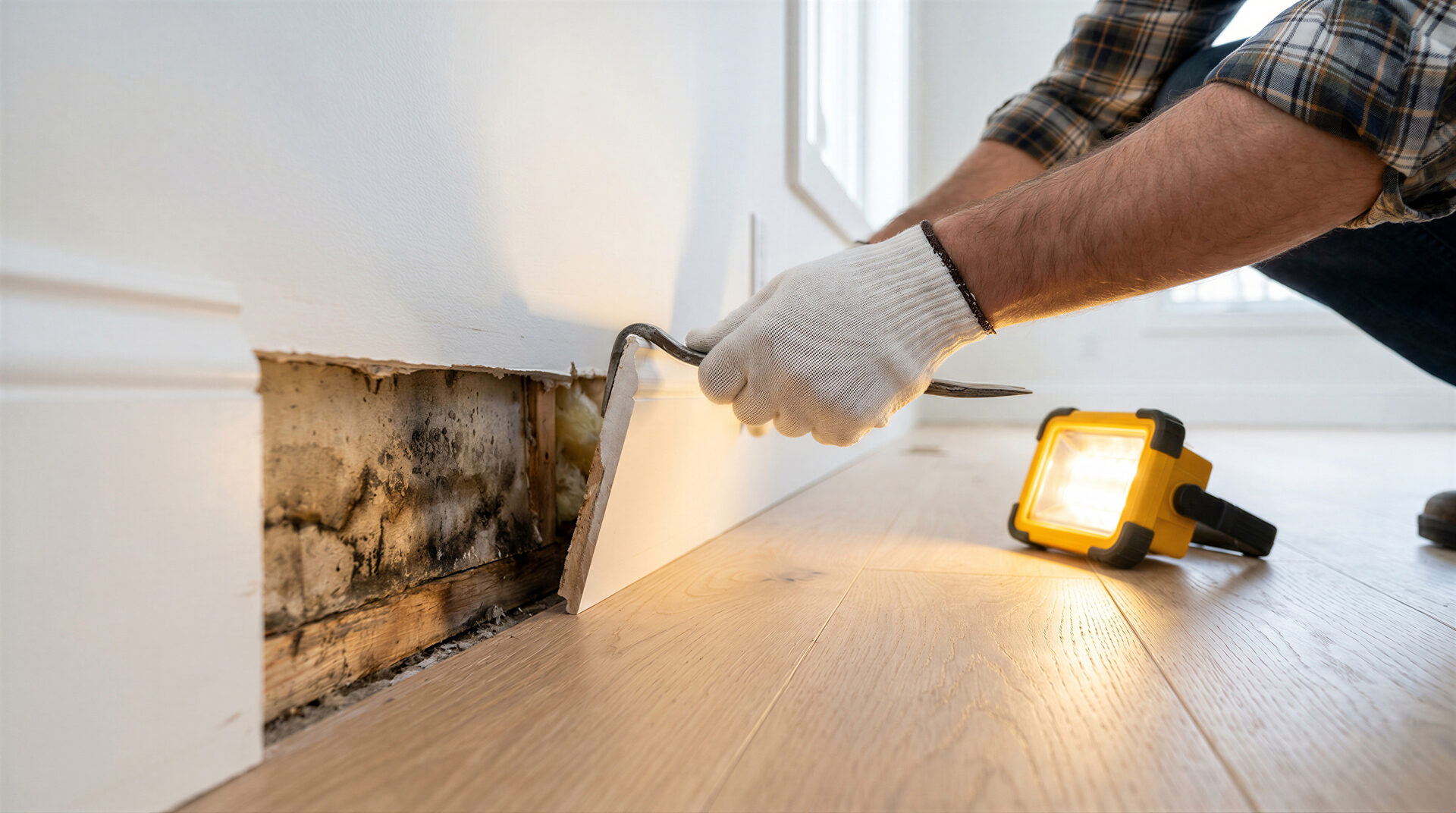
The scope may include moisture detection, baseboard removal, flood cuts, selective drywall demolition, insulation removal, structural drying, and drywall reconstruction.
Drywall affected by a relatively limited amount of clean water may sometimes be dried without complete removal if it is addressed quickly and remains structurally sound.
Restoration professionals may evaluate moisture levels, the condition of the drywall, wall insulation, baseboards, and other materials before deciding on the drying approach.
Removal may be appropriate when drywall is:
The appropriate scope should be based on the actual conditions rather than automatically removing every wet wall.
Insulation behind drywall can complicate drying. Some types of insulation may retain moisture or lose performance after becoming wet.
If insulation cannot be effectively evaluated or dried in place, sections of drywall may need to be opened so the wall cavity can be addressed.
Water frequently moves behind baseboards and into the lower portion of drywall. A wall can appear relatively normal while the back side of the baseboard or drywall remains wet.
Removing baseboards may allow for better inspection and drying without necessarily requiring removal of the entire wall.
Touch alone is not a reliable way to determine whether drywall has returned to an acceptable moisture condition.
Restoration professionals use moisture meters and comparison readings from unaffected materials to monitor drying progress. The goal is to make decisions based on measured conditions rather than appearance alone.
If drywall has been removed to access wet framing or insulation, the wall should not be rebuilt until the underlying materials have been appropriately dried.
Closing a damp wall cavity can trap moisture and create additional problems.
Whether drywall needs replacement after water damage depends on the type of water, severity of saturation, condition of the material, and what is happening behind the wall. Some drywall can be saved; some should be removed.
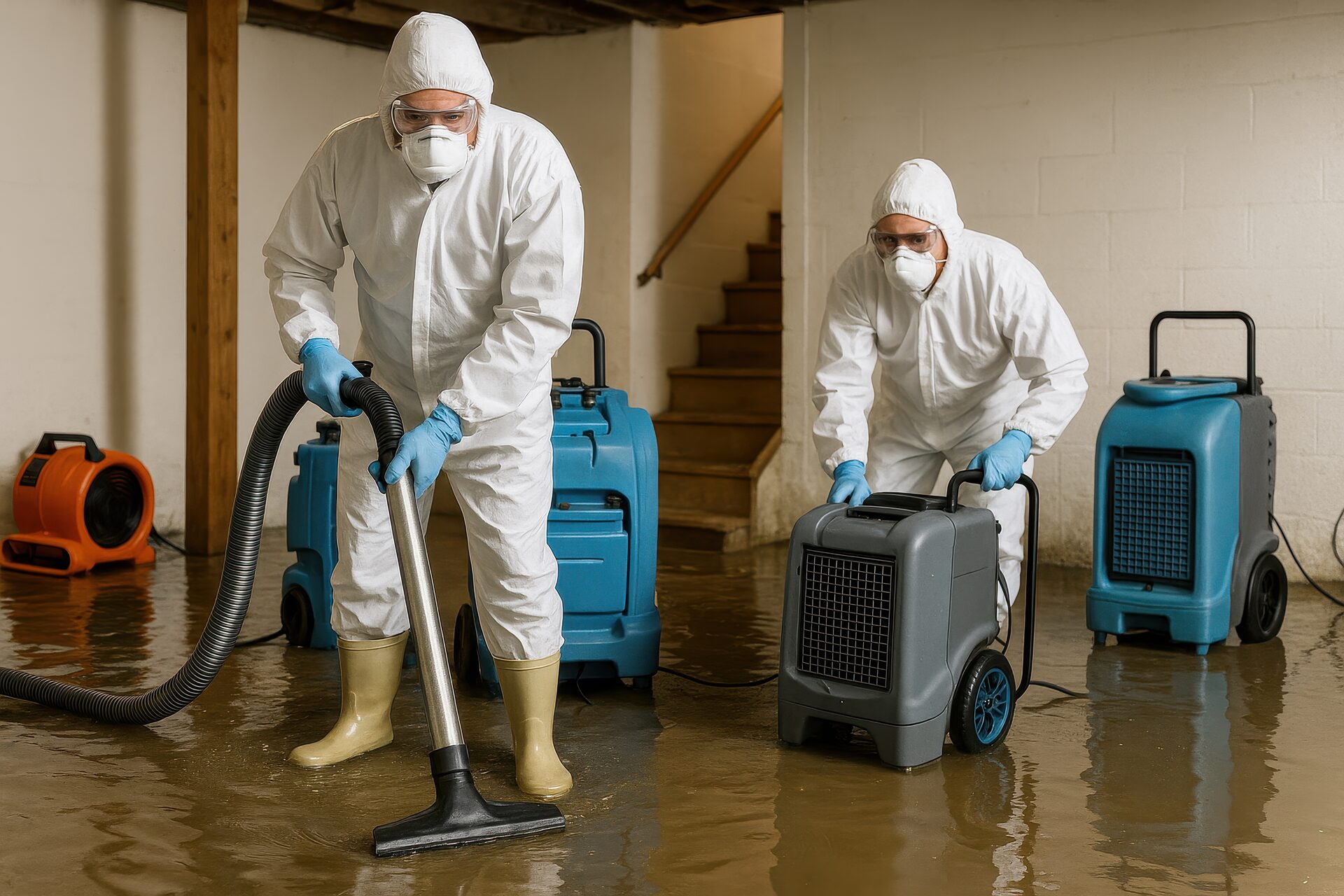
Crisp Restoration provides water damage restoration, water extraction, and structural drying for homeowners throughout San Diego County, including San Diego, Chula Vista, El Cajon, Santee, Carlsbad, and Oceanside. Our team helps homeowners evaluate water-damaged walls, identify hidden moisture, and determine an appropriate mitigation and restoration plan based on the conditions inside the property.


© Crisp Restoration 2026. All Rights Reserved.
.svg)


.webp)
