

.webp)
Discovering water damage is stressful enough without wondering what happens after the restoration company arrives. While every loss is different, professional water damage restoration generally follows a structured process designed to identify the affected areas, remove excess water, dry the property, and repair damaged materials.
Understanding the process can help San Diego County homeowners know what to expect.
Crisp Restoration handles water extraction, structural drying, water mitigation, and restoration projects across San Diego, Chula Vista, La Mesa, El Cajon, Santee, Poway, Carlsbad, Oceanside, and surrounding areas.
Depending on the property, the job may include emergency water extraction, flood cleanup, moisture mapping, selective demolition, structural drying, contents protection, cleaning, and reconstruction.
The first step is determining where the water came from and how far it traveled. Restoration professionals inspect visible damage and use moisture-detection equipment to evaluate materials that may be wet below the surface.
The assessment may include drywall, flooring, ceilings, cabinets, insulation, subfloors, and adjoining rooms.
If water is still entering the property, the source needs to be stopped or controlled before effective drying can occur.
This could involve shutting off the water supply or coordinating with a plumber, roofer, or another appropriate professional depending on the cause.
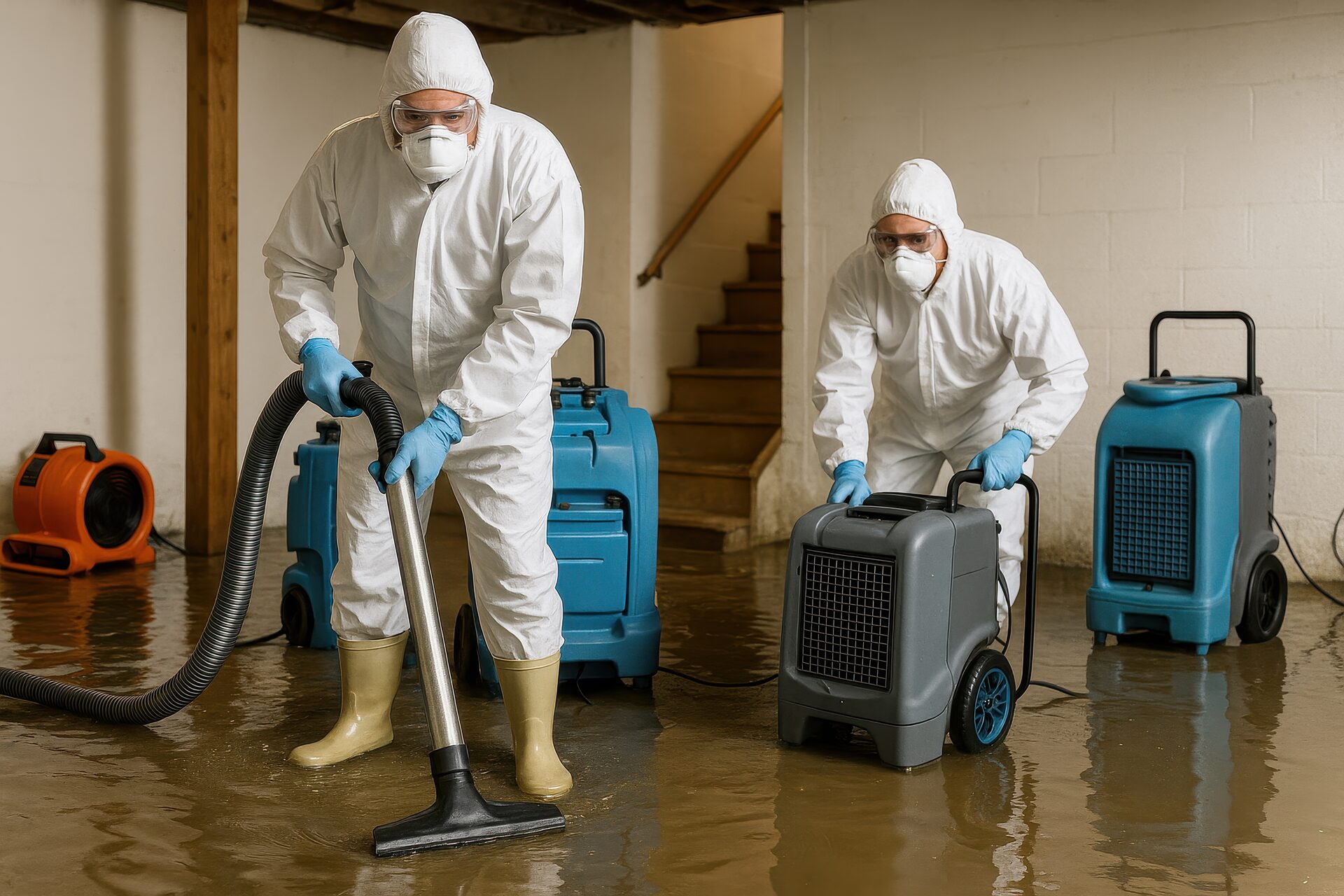
Standing water and excess moisture are removed using extraction equipment when appropriate. Removing as much bulk water as possible can make the structural drying process more efficient.
Carpet, padding, or other materials may require specialized extraction or removal depending on their condition.
Not every wet material has to be removed. One goal of professional mitigation is to determine what can reasonably be dried and restored.
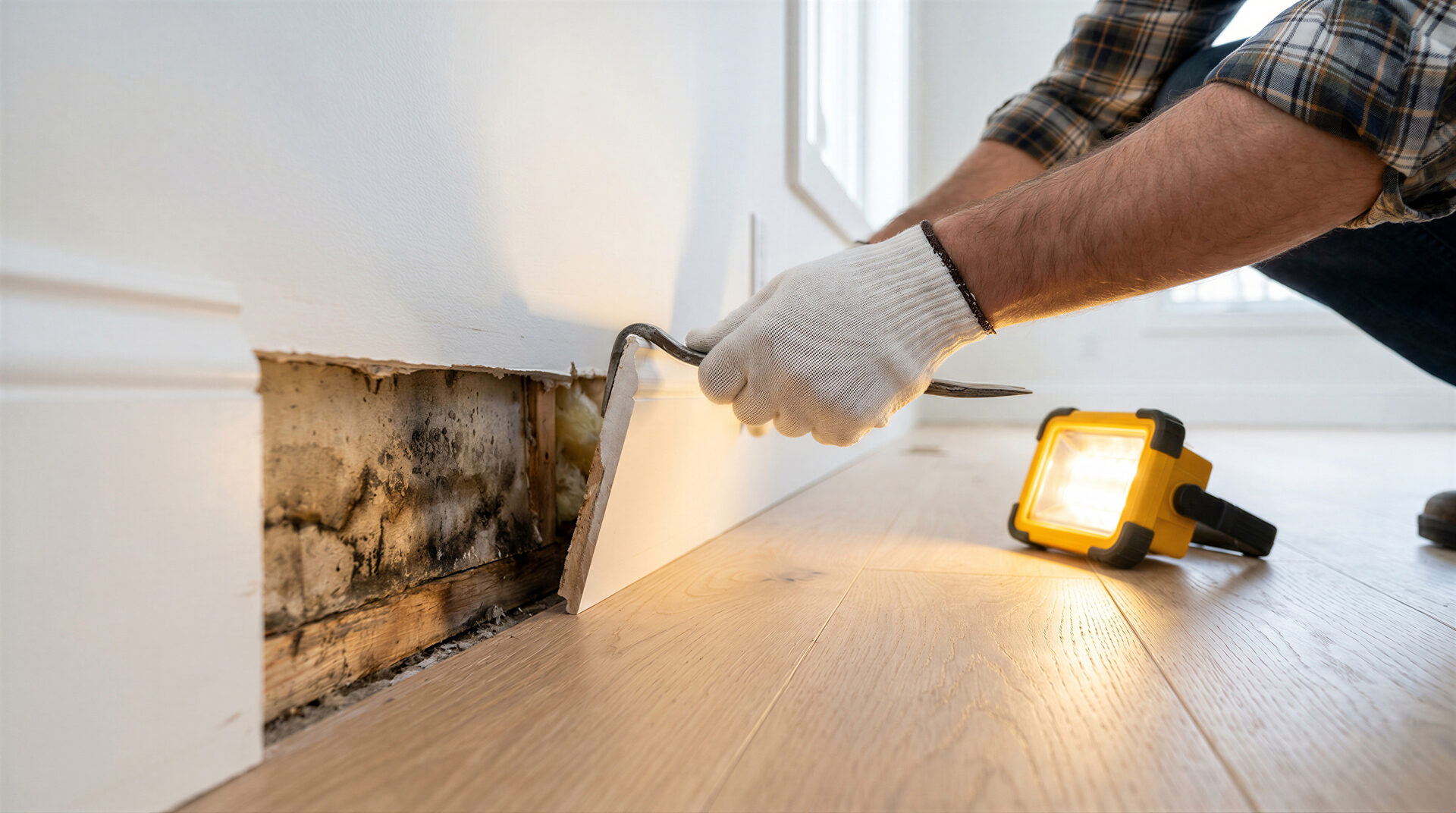
However, materials may need removal because of contamination, deterioration, damage, or an inability to dry them effectively in place. This can include sections of drywall, insulation, flooring, or other finishes.
Air movers and dehumidifiers may be installed to create conditions that encourage moisture to leave wet materials and be removed from the air.
Equipment placement and quantity depend on the affected area and drying conditions. The process is monitored rather than simply leaving fans in place for a predetermined amount of time.
Restoration professionals take moisture readings during the drying process to track progress. Equipment may be repositioned or adjusted as conditions change.
Drying is considered based on the condition of the affected materials, not just whether the room feels dry.
Affected surfaces may require cleaning or other treatment depending on the type of water and materials involved.
Once mitigation is complete, the property can be prepared for repairs.
The final phase is restoring materials that were removed or damaged. This might include drywall repair, texture, paint, flooring, baseboards, cabinetry, or other construction work.
The scope can range from minor cosmetic repairs to substantial reconstruction.
Water damage restoration is a process that moves from assessment and mitigation to drying and, when necessary, reconstruction. Each step helps ensure the property is not simply made to look dry while moisture remains hidden.
Crisp Restoration provides emergency water extraction, structural drying, water mitigation, and water damage restoration throughout San Diego County, including San Diego, Chula Vista, La Mesa, El Cajon, Santee, Carlsbad, and Oceanside. From the initial moisture assessment through repairs, our goal is to help homeowners understand the process and move their property toward a complete restoration.


© Crisp Restoration 2026. All Rights Reserved.
.svg)


.webp)
