
If you search for help with mold in your home, you will see companies offering both mold removal and mold remediation. The terms are often used interchangeably, but they describe different goals.
The short answer: mold removal suggests getting rid of all mold, which is not realistic because mold spores exist naturally in indoor and outdoor air. Mold remediation is the process of removing mold growth, cleaning affected areas, and correcting the moisture problem so mold levels return to normal and growth does not come back.
Crisp Restoration provides mold remediation for homeowners throughout San Diego County, including San Diego, Chula Vista, La Mesa, El Cajon, Santee, Escondido, Carlsbad, and Oceanside.
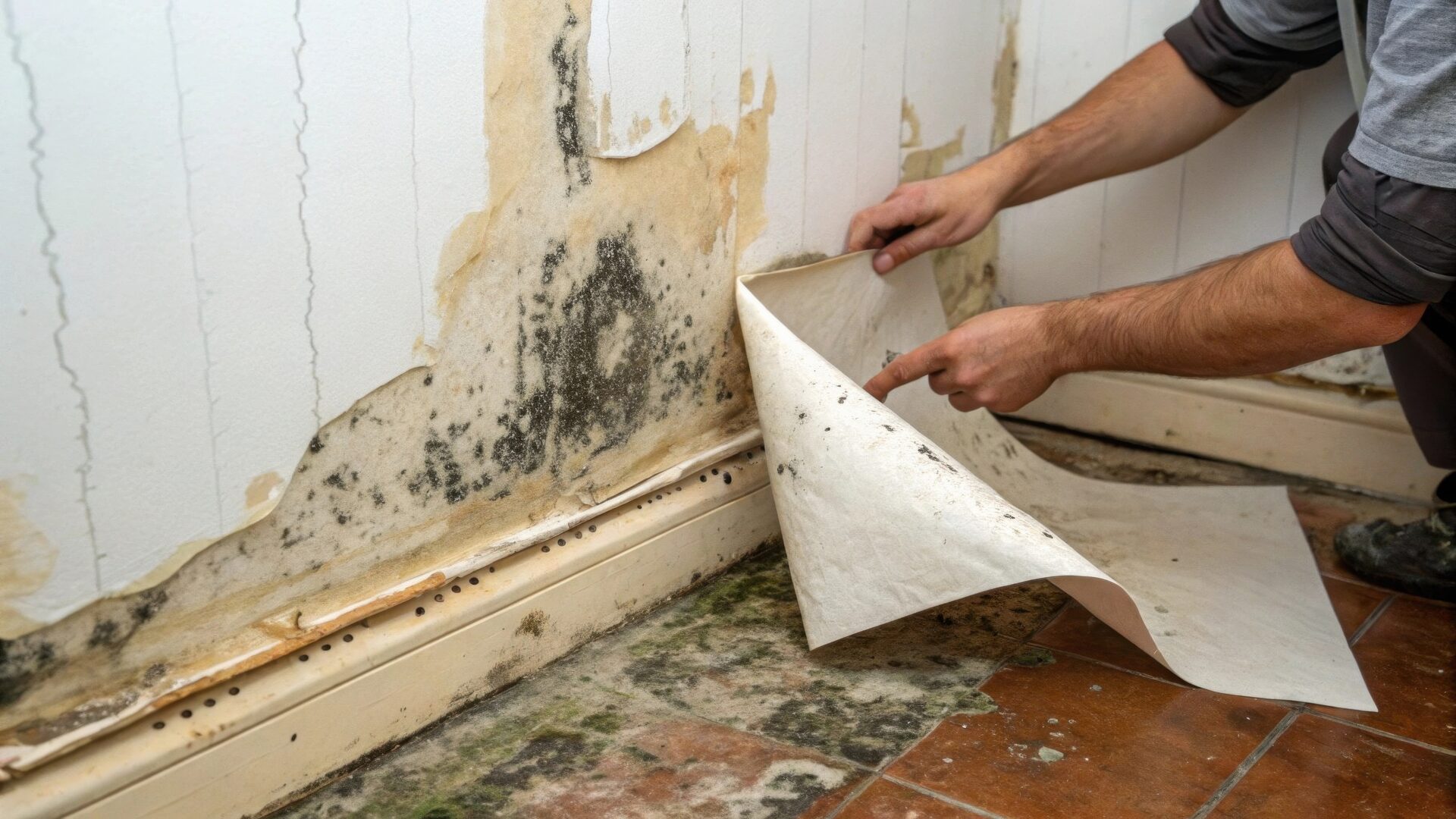
Mold removal usually refers to physically cleaning or taking out visible mold. It is often a narrower job focused on the surface you can see, such as wiping mold off a bathroom ceiling or cutting out a moldy section of drywall.
The limitation is that removing visible mold does not necessarily address hidden growth, airborne spores released during cleanup, or the moisture source that allowed mold to grow in the first place.
Mold remediation is a broader, more complete process. It focuses on:
The goal is to return the indoor environment to normal mold levels and reduce the chance of regrowth.
Mold spores are part of the natural environment. No company can permanently remove every spore from a home. Be cautious of anyone who promises total mold elimination. A better question to ask is how the company will contain the work area, remove growth, address the moisture source, and verify the results.
The EPA notes that homeowners can often handle small mold problems themselves, generally areas smaller than about 10 square feet, provided the moisture problem is fixed and the mold is not related to sewage or contaminated water. Larger areas, mold inside walls or HVAC systems, mold after sewage backups or flooding, and situations involving people with health concerns are better handled by professionals.
Most mold problems trace back to water. Common sources include slow plumbing leaks, roof leaks during winter storms, water heater and appliance leaks, poor bathroom ventilation, and coastal humidity. Learn more in how much water damage causes mold.
Not exactly. Removal focuses on taking out visible mold. Remediation is a complete process that includes containment, removal, cleaning, fixing the moisture source, and drying.
Small, contained jobs may take a day or two. Larger jobs involving multiple rooms, wall cavities, or drying can take several days or longer, plus time for rebuilding.
Mold can return if the moisture problem is not fixed. That is why remediation focuses on correcting the source as well as removing growth.
The EPA notes that if mold is visible, sampling is usually not necessary to decide on cleanup. Testing can help when there is a musty odor without visible growth or to verify results after remediation.
It depends on your policy and what caused the mold. Mold from a sudden, covered water loss may be covered, often with limits, while mold from long-term leaks or humidity is commonly excluded.
Mold removal and mold remediation are often used to mean the same thing, but remediation is the more complete approach: it removes growth, protects the rest of your home during work, and fixes the moisture problem so mold does not come back.
If you have found mold in your San Diego County home, Crisp Restoration can assess the extent of the problem and provide a clear plan for mold remediation and prevention. Contact our team to schedule an inspection.
2026-10-292026-10-29


© Crisp Restoration 2026. All Rights Reserved.