

.webp)
After a leak, flood, or plumbing failure, one of the first concerns homeowners often have is mold. There is no single countdown that applies to every property, but mold can begin developing when moisture remains in building materials long enough to create favorable conditions.
That is why water damage restoration focuses on more than removing visible water. Finding hidden moisture and drying affected materials quickly are important parts of reducing the risk of additional damage.
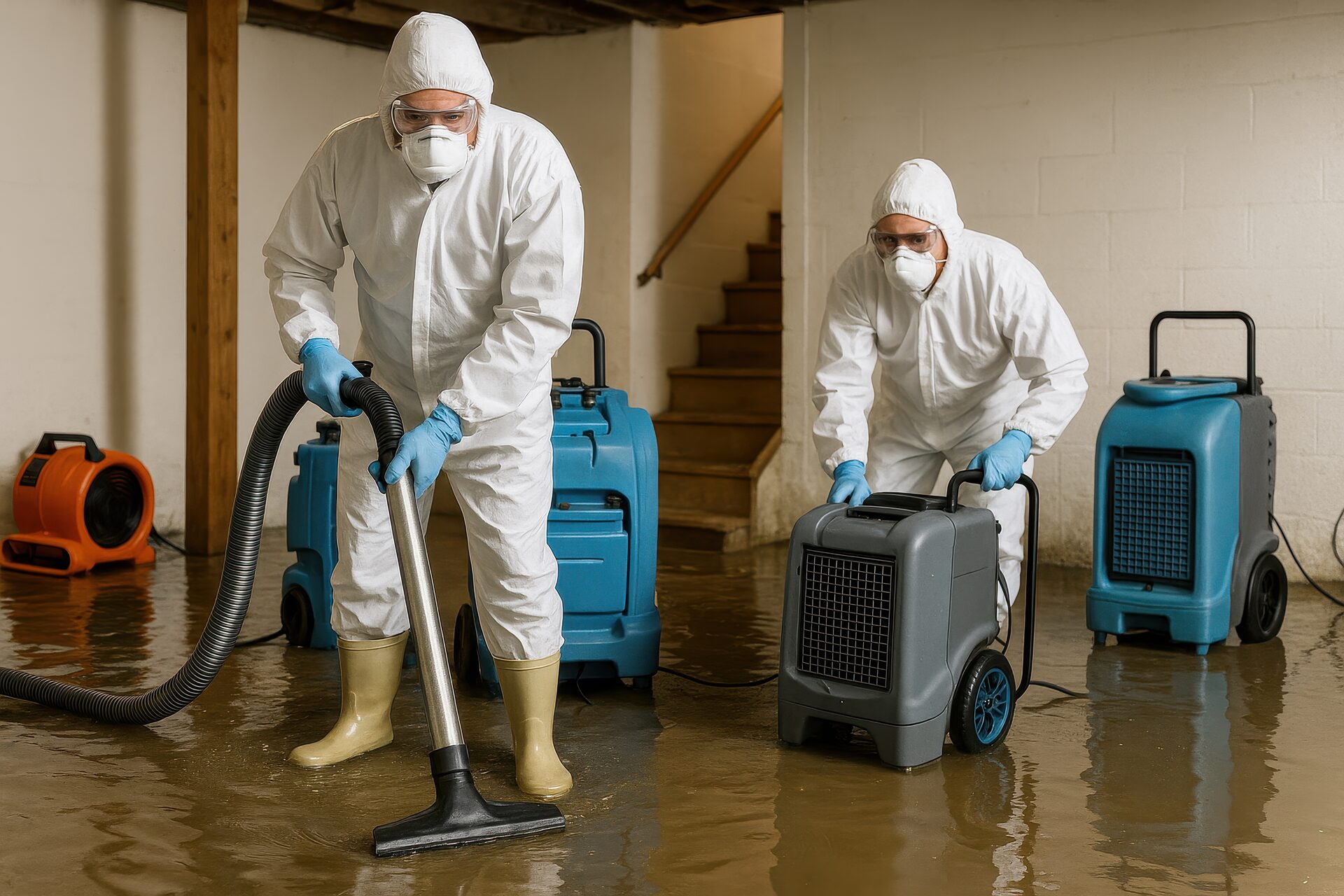
Whether the loss is a burst pipe in Chula Vista, an appliance leak in La Mesa, or water intrusion in Carlsbad, fast water extraction and structural drying can help limit how long building materials remain wet.
Common restoration job types include burst pipe cleanup, appliance leak cleanup, flood cleanup, moisture detection, structural drying, and mold prevention after a water loss.
Mold spores are naturally present in indoor and outdoor environments. The problem develops when moisture provides the conditions needed for mold to grow on materials such as drywall paper, wood, insulation, carpet backing, and other organic surfaces.
Temperature, humidity, airflow, the type of material, and the amount of water involved can all influence how quickly conditions change.
You will often hear restoration professionals emphasize the first 24 to 48 hours after water damage. This should not be treated as a guarantee that mold will or will not appear within a specific number of hours. Instead, it highlights the importance of addressing wet materials promptly.
The longer drywall, insulation, flooring, or framing stays wet, the greater the opportunity for secondary damage to develop.
A room can look dry while moisture remains behind the visible surfaces. Water can move through:
Professional moisture meters and other detection tools can help identify areas that require additional drying or investigation.
Opening windows or placing a household fan in the room can increase airflow, but it does not necessarily control the overall drying environment.
Professional structural drying may involve water extraction, targeted air movement, dehumidification, temperature management, and repeated moisture measurements. The objective is not simply to make the room feel dry; it is to return affected materials toward an appropriate dry condition.
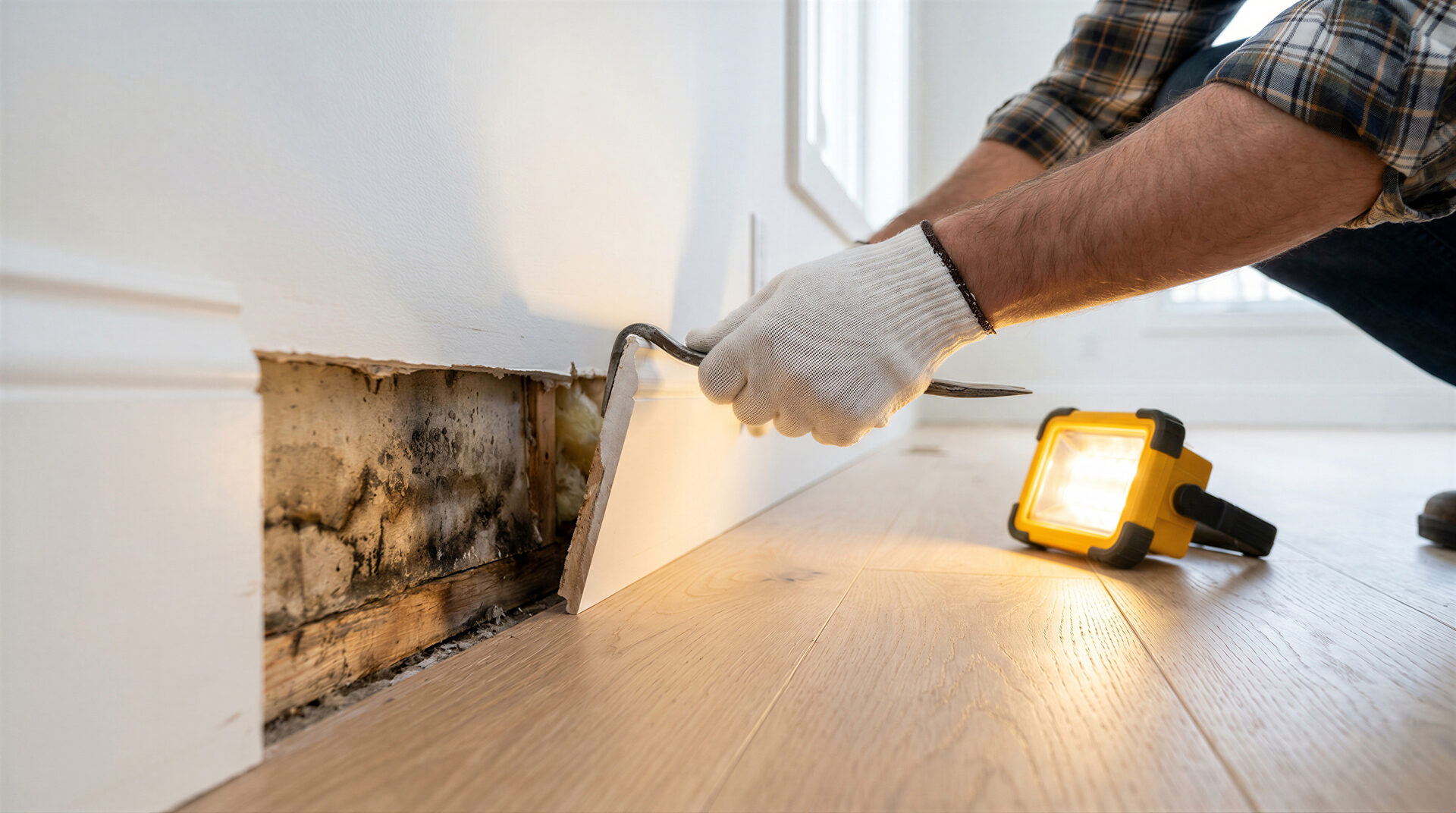
Not every moisture problem produces immediate visible mold. Homeowners should pay attention to changes such as staining, bubbling paint, swollen baseboards, warped flooring, soft drywall, persistent musty odors, or unusually humid conditions.
These signs do not automatically confirm mold, but they can indicate that further evaluation is warranted.
If you find a leak or water intrusion, stop the source when it is safe to do so and address the affected materials promptly. For anything beyond a minor surface spill, a professional moisture assessment can help determine how far the water traveled.
This is particularly important when water has entered wall cavities, ceilings, flooring systems, or other concealed areas.
There is no universal point at which water damage suddenly becomes a mold problem. The safest approach is to treat prolonged moisture as something that should be addressed quickly rather than waiting for visible mold to appear.
Crisp Restoration provides water mitigation, water extraction, structural drying, and water damage restoration throughout San Diego County, including San Diego, Chula Vista, La Mesa, El Cajon, Carlsbad, and Oceanside. A prompt assessment can help identify hidden moisture, establish a drying plan, and reduce the likelihood of additional property damage.


© Crisp Restoration 2026. All Rights Reserved.
.svg)


.webp)
